

Blog
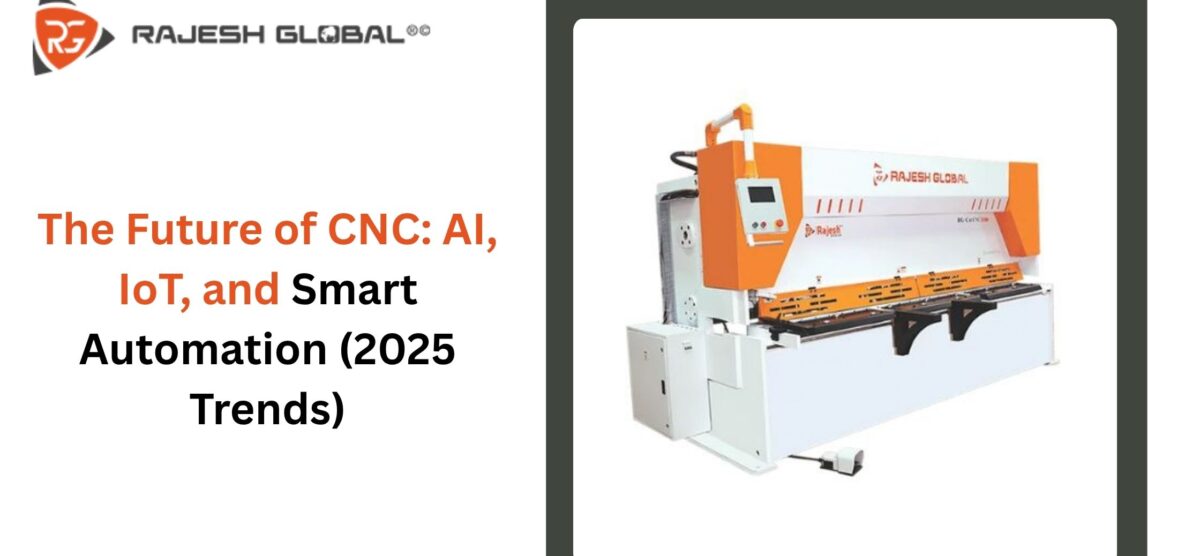
The Future of CNC: AI, IoT, and Smart Automation (2025 Trends)
As global manufacturing races toward unprecedented efficiency and precision, CNC (Computer Numerical Control) machining is at the heart of this transformation. In 2025, the convergence of Artificial Intelligence (AI), Internet of Things (IoT), and smart automation is reshaping factories into connected, intelligent hubs of productivity. For Indian manufacturers and entrepreneurs, the strategic adoption of these technologies is defining the industry’s new gold standard.
What Is Smart Automation in CNC?
Contents
- 1 What Is Smart Automation in CNC?
- 2 IoT and CNC: Building the Connected Workshop
- 3 Artificial Intelligence: The Brainpower Behind Smart CNC
- 4 Security & Data Integrity: Protecting the Smart Factory
- 5 Industry Applications & Success Stories
- 6 Implementation: Transitioning to AI/IoT-Enabled CNC
- 7 Latest Trends: The Roadmap to 2030
- 8 The Rajesh Machine Tools Edge
- 9 Conclusion: Shaping Manufacturing’s Intelligent Future
Smart automation in CNC combines machine intelligence, networked sensors, and adaptive algorithms to create self-optimizing production environments. These systems go beyond static programming—machines now learn, predict, and optimize processes without human intervention.
“Manufacturing is entering an age where machines are no longer passive tools but active agents of productivity,” says a leading expert in digital factories. With sensors embedded throughout, CNC machines collect actionable data on wear, temperature, output, and quality, feeding it to AI-driven platforms for real-time, autonomous optimization.
IoT and CNC: Building the Connected Workshop
IoT in CNC means every machine, sensor, and process is digitally networked. This enables:
- Real-Time Monitoring: Machines display their status—idle time, uptime, part quality—on live dashboards accessible anywhere.
- Predictive Analytics: IoT platforms analyze vibration, tool wear, and cycle times, enabling predictive maintenance and minimizing costly breakdowns.
- Remote Control: Operators manage machines from mobile devices, adjusting schedules and parameters instantly, reducing labor dependence.
- Energy Management: IoT tracks power consumption, automating processes to reduce waste and improve sustainability.
Zinger: In 2025, a CNC operator can troubleshoot, reprogram, and maintain a fleet of machines from a single tablet—no more running from station to station.
Artificial Intelligence: The Brainpower Behind Smart CNC
AI is upgrading CNC machining from rigid task execution to dynamic process management. Features include:
- Adaptive Toolpaths: AI algorithms generate and optimize cutting paths based on part geometry and real-time feedback—boosting speed and surface finish.
- Self-Tuning Controls: Machines automatically adjust feed rates, spindle speeds, and coolant flow for every material, slashing setup times.
- Visual Inspection: AI-powered cameras spot defects during machining, flagging inconsistencies before they reach downstream operations.
- Production Forecasting: Machine learning platforms analyze order histories and supply trends, adjusting production schedules to meet demand spikes or delays.
“Smart CNC shops now use AI to optimize not just part quality, but entire workflows, from tool changes to inventory management,” says a plant manager at a leading automotive supplier.
Security & Data Integrity: Protecting the Smart Factory
As data becomes the lifeblood of manufacturing, cybersecurity is a top priority. Secure IoT protocols, encrypted connections, and role-based access protect intellectual property and operational data from cyber threats. Manufacturers are investing in “zero trust” architectures, where every device, user, and network segment needs explicit authorization.
Industry Applications & Success Stories
Industries rapidly adopting smart CNC include:
- Automotive: High-volume shops use IoT-enabled CNCs for near-zero downtime, while AI schedules tool replacements ahead of failures.
- Aerospace: Complex part geometries benefit from adaptive toolpathing and digital traceability for compliance.
- Medical Devices: AI-powered inspection ensures tight tolerances and error-free workflows for critical components.
- Job Shops: Small manufacturers leverage cloud-based IoT solutions to compete globally, optimizing capacity and cost.
Zinger: Data shows predictive maintenance can reduce downtime by up to 40%, while smart scheduling cuts energy use by 20%—creating instant competitive edge.
Implementation: Transitioning to AI/IoT-Enabled CNC
To maximize ROI, manufacturers should:
- Equip CNCs with IoT sensors, edge devices, and secure controllers.
- Invest in integrated platforms that consolidate, visualize, and analyze shop-floor data.
- Train staff in digital skills—interpreting analytics, troubleshooting systems, and managing cloud-based controls.
- Ensure scalable infrastructure for new machine integration and data growth.
The future belongs to manufacturers who adapt quickly: “Factories that ignore smart automation risk obsolescence; those who embrace it become industry leaders overnight.”
Latest Trends: The Roadmap to 2030
The rise of digital twins—virtual models of CNC machines and workflows—enables virtual setup, diagnosis, and optimization before a real part is made. As AI platforms become more sophisticated, expect “lights-out manufacturing,” where unmanned CNCs run autonomously, even overnight, boosting capacity without added labor.
5G networks will amplify real-time communication, enabling massive data flows between machines, suppliers, and customers. Sustainability is front-and-center, with smart algorithms tracking carbon footprint and automating eco-friendly production choices.
The Rajesh Machine Tools Edge
Rajesh Machine Tools is committed to delivering CNC solutions that meet tomorrow’s standards, today. With integrated IoT, AI-ready controls, and customizable automation, every Rajesh machine is a future-proof investment in efficiency, reliability, and innovation.
Manufacturers partnering with Rajesh Machine Tools receive not only cutting-edge equipment but expert support—from implementation and training to ongoing upgrades for AI and IoT compatibility.
Conclusion: Shaping Manufacturing’s Intelligent Future
AI, IoT, and smart automation are no longer optional add-ons; they are the defining technologies of the world’s most competitive factories. In 2025, investing in connected CNC machines means unlocking new levels of productivity, flexibility, and profitability. Rajesh Machine Tools is leading the charge for Indian manufacturers—empowering businesses to harness smart automation and build the future of precision engineering.
The era of smart CNC has arrived. Are you ready to shape it?