
Blog
Why Hydraulic Press Brake Machines Are Ideal for Deep Drawing Applications
Deep drawing is a critical manufacturing process used in industries such as automotive, aerospace, electrical, and metal fabrication. It involves forming flat metal sheets into complex shapes without compromising structural integrity. To achieve precision, consistency, and safety in this process, manufacturers rely on advanced bending and forming machines. Among all available options, Hydraulic Press Brake Machine technology has emerged as the most reliable and efficient solution for deep drawing applications.
This blog explores why hydraulic press brake machines are ideal for deep drawing, how they compare with other metalworking machines, and how modern automation has improved their performance.
Understanding Deep Drawing in Metal Fabrication
Contents
- 1 Understanding Deep Drawing in Metal Fabrication
- 2 What Is a Hydraulic Press Brake Machine?
- 3 Why Hydraulic Press Brake Machines Excel in Deep Drawing
- 4 Role of CNC Technology in Deep Drawing
- 5 Comparison with Other Metalworking Machines
- 6 Importance of Front Cylinder Press Brake Machines
- 7 Enhanced Safety for Operators
- 8 Integration with Shearing Operations
- 9 Material Versatility
- 10 Reduced Tool Wear and Maintenance
- 11 Energy Efficiency and Cost Effectiveness
- 12 Industries That Benefit from Hydraulic Press Brake Deep Drawing
Deep drawing is a metal forming process where a sheet metal blank is radially drawn into a die using controlled force. Unlike simple bending, deep drawing requires:
- Uniform pressure distribution
- Precise stroke control
- Minimal material thinning
- Smooth surface finish
- High repeatability
Achieving these requirements consistently is challenging without a powerful and stable machine system. This is where hydraulic technology proves its superiority.
What Is a Hydraulic Press Brake Machine?
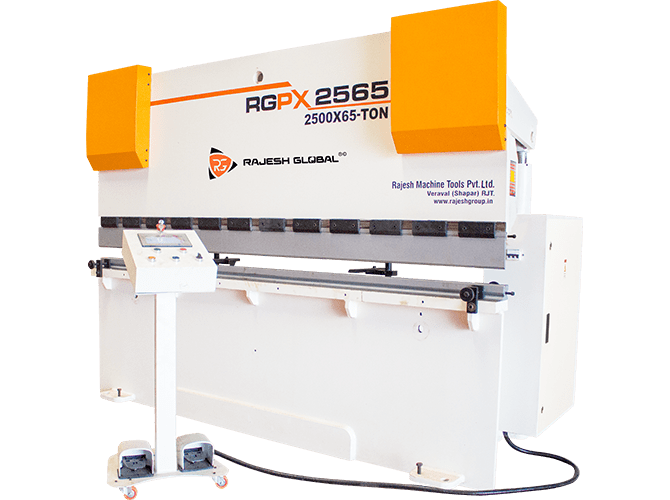
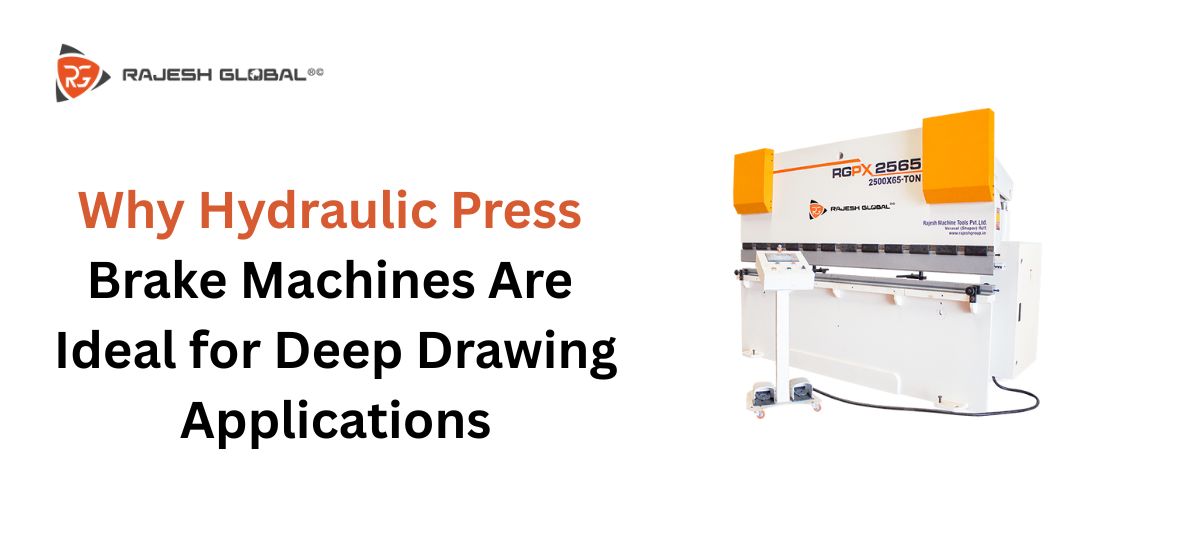
A Hydraulic Press Brake Machine uses hydraulic cylinders to apply controlled force on metal sheets for bending and forming operations. Unlike mechanical systems, hydraulic press brakes offer adjustable pressure, smooth motion, and higher tonnage control.
These features make them especially suitable for deep drawing, where material flow must be precisely managed to prevent cracks, wrinkles, or deformation.
Why Hydraulic Press Brake Machines Excel in Deep Drawing
1. Precise Pressure Control
Deep drawing requires gradual force application. Hydraulic systems allow operators to control pressure accurately throughout the stroke. This precision ensures uniform material flow, reducing the risk of tearing or thinning.
Mechanical systems often apply force abruptly, which is unsuitable for deep drawing of complex shapes.
2. Smooth and Stable Operation
Hydraulic motion is naturally smooth. This stability is essential when forming deep or complex components. Consistent stroke movement results in superior product quality and longer die life.
In contrast, machines such as the C Type Mechanical Power Press may generate vibrations that affect deep drawing accuracy.
3. Ideal for Complex and Deep Profiles
Hydraulic press brakes can handle a wide variety of deep drawing tasks. These include:
- Deep channels
- Cylindrical forms
- Box-type enclosures
- Automotive panels
A C Frame Hydraulic Press configuration further enhances accessibility and flexibility, allowing easy handling of oversized or complex workpieces.
4. Variable Speed Control
One major advantage of hydraulic press brakes is variable ram speed. Operators can slow down the machine during critical forming stages and increase speed during return strokes. This flexibility improves both efficiency and product quality.
Such control is essential for deep drawing processes where different stages require different speeds.
Role of CNC Technology in Deep Drawing
CNC Press Brake Machine: Precision Redefined
A CNC Press Brake Machine integrates computer numerical control for high-precision bending and forming. CNC systems enhance deep drawing by offering:
- Programmable stroke depth
- Accurate back gauge positioning
- Repeatable bending angles
- Minimal human error
For industries requiring mass production with tight tolerances, CNC press brakes are the preferred choice.
Automation Improves Productivity
CNC technology enables quick setup changes and faster production cycles. It reduces downtime and ensures consistent output even during long production runs. When paired with hydraulic systems, CNC control delivers unmatched deep drawing performance.
Comparison with Other Metalworking Machines
Hydraulic Press Brake vs Mechanical Power Press
A C Type Mechanical Power Press is suitable for punching and blanking but lacks the flexibility and pressure control required for deep drawing. Hydraulic press brakes provide better adaptability for varying material thickness and shapes.
Hydraulic Iron Worker vs Press Brake
A Hydraulic Iron Worker is a versatile machine used for cutting, punching, and notching. While it plays an important role in fabrication workshops, it is not designed for deep drawing. Hydraulic press brakes offer specialized forming capabilities unmatched by iron workers.
Plate – Rolling vs Deep Drawing
Plate – Rolling machines are ideal for creating cylindrical and conical shapes by rolling metal sheets. However, they cannot replace deep drawing processes that require enclosed or complex geometries. Hydraulic press brakes bridge this gap with precise forming control.
Importance of Front Cylinder Press Brake Machines
A Front Cylinder Press Brake Machine places hydraulic cylinders at the front of the machine, providing better force distribution and visibility. This design improves operator control and ensures even bending pressure, which is crucial for deep drawing applications.
Benefits include:
- Reduced frame deflection
- Enhanced accuracy
- Safer operation
- Improved tool life
Enhanced Safety for Operators
Hydraulic systems are inherently safer than mechanical presses. Advanced safety features include:
- Overload protection
- Emergency stop functions
- Pressure relief valves
- CNC-controlled safety zones
Safety becomes even more important when working with deep drawing processes that require high tonnage and prolonged operation.
Integration with Shearing Operations
A CNC Hydraulic Shearing Machine complements press brake operations by preparing accurate blanks before deep drawing. Proper blank size and clean edges significantly improve deep drawing results, reducing defects and scrap.
Using shearing and press braking systems together ensures a streamlined and efficient production workflow.
Material Versatility
Hydraulic press brakes can handle a wide variety of materials, including:
- Mild steel
- Stainless steel
- Aluminum
- Copper
- High-strength alloys
The ability to adjust pressure and stroke makes them ideal for materials with different tensile properties, which is essential in deep drawing.
Reduced Tool Wear and Maintenance
Smooth hydraulic motion minimizes shock loads on tools and dies. This leads to:
- Longer die life
- Reduced maintenance costs
- Improved machine uptime
Over time, these benefits translate into significant cost savings for manufacturers.
Energy Efficiency and Cost Effectiveness
Modern hydraulic press brakes are designed with energy-saving systems such as variable displacement pumps and servo hydraulics. These features reduce power consumption without compromising performance.
When compared to older mechanical systems, hydraulic press brakes offer better energy efficiency for deep drawing operations.
Industries That Benefit from Hydraulic Press Brake Deep Drawing
Hydraulic press brake machines are widely used in:
- Automotive manufacturing
- Aerospace component fabrication
- Electrical enclosures
- Kitchen equipment production
- Industrial machinery
Their ability to deliver high-quality deep-drawn components makes them indispensable across industries.
Final Thoughts
Deep drawing is a demanding process that requires precision, control, and reliability. A Hydraulic Press Brake Machine offers all these advantages, making it the ideal solution for modern manufacturing needs. When enhanced with CNC technology and supported by complementary machines such as a CNC Hydraulic Shearing Machine, manufacturers can achieve unmatched efficiency and quality.
Whether you are producing complex automotive panels or precision industrial components, investing in a hydraulic press brake ensures long-term performance, safety, and profitability.