
Blog

How Modern Plate Rolling Technology Improves Productivity in Fabrication Workshops
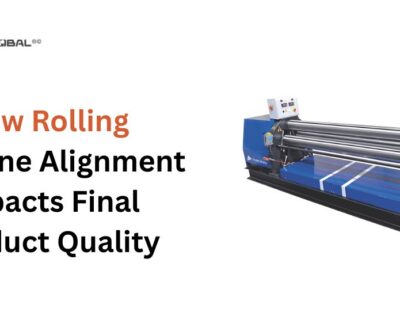
The fabrication industry has undergone a massive transformation in recent years. Where workshops once relied on manual tools and inconsistent methods, advanced machines now drive accuracy, speed, and efficiency. Among these innovations, Plate – Rolling technology stands out as a game-changer for metal fabrication workshops. With modern automation, CNC control, and powerful hydraulic systems, plate rolling machines help manufacturers achieve smooth curves, high precision, and faster output.
But the true productivity boost does not come from plate rolling alone. A combination of advanced presses and cutting machinery—such as the C Type Mechanical Power Press and Front Cylinder Press Brake Machine—creates a complete automated workflow that elevates the performance of fabrication units.
In this detailed blog, we will explore how modern plate rolling technology integrates with advanced workshop machinery to enhance productivity, reduce human errors, improve safety, and deliver consistent quality.
Understanding Modern Plate Rolling Technology
Contents
- 1 Understanding Modern Plate Rolling Technology
- 2 How Plate Rolling Improves Productivity in Fabrication Workflows
- 3 2. Faster Rolling Cycles for High Output
- 4 3. Improved Precision for Superior Quality
- 5 How Other Advanced Machines Complement Plate Rolling
- 5.1 1. C Type Mechanical Power Press — High-Speed Metal Forming
- 5.2 2. C Frame Hydraulic Press — Precision Forming with Controlled Pressure
- 5.3 3. CNC Press Brake Machine — Bending with Absolute Precision
- 5.4 4. CNC Hydraulic Shearing Machine — High-Speed Sheet Cutting
- 5.5 5. Hydraulic Press Brake Machine — Heavy-Duty and Versatile
- 5.6 6. Front Cylinder Press Brake Machine — Ideal for Large-Scale Bending
- 6 Benefits of Integrating Modern Plate Rolling with Advanced Workshop Machines
- 7 Real-World Applications of Modern Plate Rolling
What Is Plate Rolling?
Plate – Rolling is the process of bending and shaping metal sheets into curved forms, cylinders, or cones using a set of rollers. This technique is widely used in industries such as:
- Heavy engineering
- Construction
- Shipbuilding
- Pressure vessels
- Automotive
- Metal furniture
- Fabricated pipe and tank manufacturing
Traditional plate rolling required manual adjustments and multiple passes. Modern machines, however, use hydraulic power, CNC control, and advanced rollers that can shape thick plates with precision.
How Plate Rolling Improves Productivity in Fabrication Workflows
1. Enhanced Automation Through CNC Integration
One of the biggest advantages of modern plate rolling machines is CNC automation. CNC systems allow workshops to input precise bending parameters, saving time and improving accuracy.
Automated features include:
- Pre-programmed bending sequences
- Automatic roller positioning
- Real-time thickness compensation
- Error-free repeatability
This level of automation dramatically reduces setup time and eliminates human error. When combined with other CNC-controlled equipment such as the CNC Press Brake Machine and CNC Hydraulic Shearing Machine, the entire workflow becomes streamlined and highly productive.
2. Faster Rolling Cycles for High Output
Advanced Plate – Rolling machines are designed to handle multiple plate thicknesses with high-speed rollers and hydraulic systems. This increases output, especially for workshops that handle large orders or continuous production.
Some major speed-enhancing features include:
- High-torque hydraulic motors
- Adjustable roller pressure
- Automatic side supports for large plates
- Pre-bending capability to reduce manual refitting
This reduces cycle time and enables fabrication businesses to scale efficiently.
3. Improved Precision for Superior Quality
Modern rolling machines come equipped with digital readouts, laser alignment sensors, and intelligent CNC systems. This ensures that even large and thick plates are bent with millimeter-level accuracy.
Additional accuracy tools:
- Crowning systems for uniform bending
- Digital thickness measurement
- Hydraulic lateral supports
- Servo-assisted rollers
Precision becomes even more valuable when integrated with accurate forming equipment like the Hydraulic Press Brake Machine and Front Cylinder Press Brake Machine, ensuring the final output matches the exact design specifications.
How Other Advanced Machines Complement Plate Rolling
Plate rolling alone cannot complete a fabrication project. The true productivity boost comes when rolling machines work in harmony with cutting, bending, and pressing equipment. Below is how each machine contributes to an efficient workflow.
1. C Type Mechanical Power Press — High-Speed Metal Forming
The C Type Mechanical Power Press is known for its:
- Rapid punching speed
- Sturdy frame
- High repeat accuracy
- Versatile forming abilities
In a fabrication workflow, this power press prepares metal sheets for rolling by performing operations like:
- Punching
- Notching
- Forming
- Embossing
When these processes are completed quickly and accurately, plate rolling machines receive ready-to-roll material, speeding up the entire production chain.
2. C Frame Hydraulic Press — Precision Forming with Controlled Pressure
The C Frame Hydraulic Press adds flexibility and precision to fabrication workshops. With hydraulic pressure control, it provides consistent force for operations such as:
- Deep drawing
- Bending
- Straightening
- Press fitting
Hydraulic presses complement Plate – Rolling machines by shaping metal before and after rolling. Their controlled pressure ensures the material integrity remains intact, especially for thick or high-strength plates.
3. CNC Press Brake Machine — Bending with Absolute Precision
Before rolling, many sheets require sharp bends, angles, or edges. The CNC Press Brake Machine provides unmatched precision due to its CNC programming, backgauges, and hydraulic or servo-electric systems.
Productivity advantages:
- Pre-programmed bending sequences
- Fast and consistent bending
- Minimal manual intervention
- Error-free repeatability
This makes it perfect for producing complex shapes that must match curved sections formed by plate rolling.
4. CNC Hydraulic Shearing Machine — High-Speed Sheet Cutting
The CNC Hydraulic Shearing Machine plays a crucial role at the start of the fabrication workflow. It ensures metal sheets are cut perfectly before rolling.
Key benefits:
- Accurate shearing
- Smooth edges
- CNC-controlled blade gaps
- Fast cutting cycles
Accurate cutting reduces waste and ensures that the rolled plates have consistent dimensions, leading to smooth workflow continuity.
5. Hydraulic Press Brake Machine — Heavy-Duty and Versatile
The Hydraulic Press Brake Machine is essential for bending thick plates or large sheets that require significant force. It is widely used in heavy engineering, construction, and automotive manufacturing.
Advantages:
- High tonnage capacity
- Flexible bending options
- Uniform force distribution
- Safe and stable performance
When paired with plate rolling, this machine enables workshops to create everything from structural beams to cylindrical tanks with ease.
6. Front Cylinder Press Brake Machine — Ideal for Large-Scale Bending
The Front Cylinder Press Brake Machine is designed for workshops that handle large metal sheets requiring precision bending. With its front-mounted hydraulic cylinders, it delivers excellent stability and straight bending lines.
Integration benefits:
- Perfect for large fabrication components
- Ideal for heavy bending before rolling
- Stable and durable frame
- Enhanced control over bending depth
This machine is especially useful for industries like shipbuilding, construction, and heavy tank manufacturing.
Benefits of Integrating Modern Plate Rolling with Advanced Workshop Machines
When workshops combine Plate – Rolling with presses, shearing machines, and CNC systems, the productivity gains multiply. Here’s how:
Reduced Manual Labor
Automation allows operators to manage multiple machines simultaneously.
Improved Safety
Hydraulic and CNC systems reduce risk during heavy operations.
Better Accuracy and Consistency
Digital controls maintain precise measurements in every cycle.
Higher Production Speed
Faster rolling, bending, and cutting reduce lead time significantly.
Lower Material Waste
Pre-programmed cutting and bending improve sheet utilization.
Ability to Handle Large Orders
Workshops can scale production without compromising quality.
Enhanced Flexibility in Design
Modern machines support complex shapes and advanced engineering requirements.
Real-World Applications of Modern Plate Rolling
Modern Plate – Rolling machines and their complementary equipment are used across multiple industries:
- Pressure vessels
- Boilers and tanks
- Cylindrical pipes
- Heavy steel structures
- Automobile body panels
- Industrial ducts and chimneys
- Architectural metalwork
The combination of precise cutting, pressing, and rolling ensures that industries can manufacture high-quality components for heavy-duty applications.
Conclusion
Modern Plate – Rolling technology has transformed the fabrication industry by making processes faster, more accurate, and far more efficient. When integrated with advanced workshop machinery like the C Type Mechanical Power Press and Front Cylinder Press Brake Machine, fabrication units achieve unmatched productivity and consistent quality.
Workshops that upgrade to CNC and hydraulic-powered systems not only improve product output but also gain a competitive advantage in the global fabrication market. As the industry continues to evolve, the adoption of advanced plate rolling and complementary machines will become essential for achieving excellence in metal fabrication.