
Blog
How Hydraulic Iron Worker Improve Cutting, Punching & Notching Efficiency
In today’s fast-growing metal fabrication industry, precision, power, and productivity are the three pillars that define success. When manufacturers handle heavy-duty operations such as cutting, punching, bending, and notching, traditional manual processes often slow down output and compromise accuracy. This is where a Hydraulic Iron Worker becomes an essential fabrication tool.
Highly versatile and engineered for multi-purpose metalworking, a Hydraulic Iron Worker machine streamlines production, improves workflow, and offers consistent results—making it a top choice for workshops, structural steel fabricators, and industrial manufacturing units.
In this comprehensive guide, we explore how these machines dramatically improve efficiency across cutting, punching, and notching operations. We’ll also understand how supporting equipment like Plate – Rolling and Front Cylinder Press Brake Machine work together to build a modern, productive fabrication setup.
1. What Is a Hydraulic Iron Worker?
Contents
- 1 1. What Is a Hydraulic Iron Worker?
- 2 2. Improving Cutting Efficiency With Hydraulic Iron Workers
- 3 3. Enhancing Punching Efficiency in Fabrication
- 4 4. Notching Efficiency – A Critical Advantage of Iron Workers
- 5 5. Why Hydraulic Iron Workers Offer Greater Overall Efficiency
- 6 6. Role of Supporting Fabrication Machines in Improving Efficiency
- 7 7. Why Businesses Prefer Hydraulic Iron Workers Today
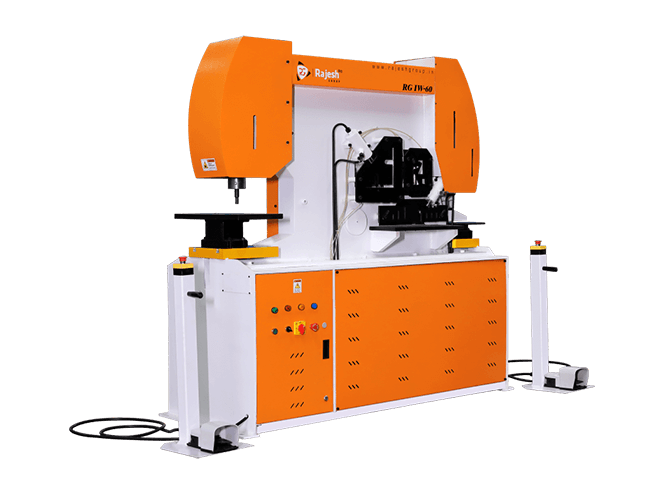
A Hydraulic Iron Worker is a powerful, multifunctional machine designed to perform key metalworking tasks such as punching, shearing, notching, bending, and trimming. Equipped with high-pressure hydraulic power, it delivers smooth, accurate, and effortless operations even on thick metal plates.
Key Benefits of Using a Hydraulic Iron Worker
- Multi-station work for increased productivity
- Consistent precision due to hydraulic control
- Less noise and vibration compared to mechanical systems
- Improved safety and ease of use
- Reduced labor dependency
- Long-term durability and low maintenance needs
Because of these advantages, the machine becomes a core asset in industries handling steel fabrication, construction materials, and heavy manufacturing.
2. Improving Cutting Efficiency With Hydraulic Iron Workers
Cutting is one of the most common and critical tasks in metal fabrication. Traditional methods often produce rough edges, require high physical effort, and take longer processing time. A Hydraulic Iron Worker significantly boosts performance in this area.
How It Enhances Cutting Efficiency
a. High Cutting Capacity
Hydraulic systems deliver powerful, controlled force, allowing the machine to cut thick metal sheets and angles with ease.
b. Clean, Accurate Cuts
The precision of a Hydraulic Iron Worker ensures smooth edges, reducing the need for rework and surface finishing.
c. Multiple Cutting Stations
These machines can cut:
- Flat bar
- Round & square bar
- Angle steel
- Channel & I-section
This versatility reduces equipment requirements and speeds up production.
Complementing Cutting Machines
To handle rounded metals and large sheet-bending requirements, industries also use supporting equipment such as Plate – Rolling machines. These help shape cylinders, cones, and curved structures that complement the cutting operations done by the iron worker.
3. Enhancing Punching Efficiency in Fabrication
Punching is essential for creating holes, slots, and shapes across steel plates and structural materials. The hydraulic mechanism of the machine ensures clean and precise punching results.
How Hydraulic Iron Workers Excel in Punching
a. Faster Cycle Time
Hydraulic pressure provides quick upward and downward strokes, allowing workers to complete more punching jobs in less time.
b. Uniform Hole Quality
Because there is no excessive vibration or mechanical jerks, hole dimensions remain consistent throughout the batch.
c. Flexible Tooling Options
Tooling can be changed quickly, enabling different hole sizes and shapes—all with one machine.
Supporting Machines for Punching Operations
Many workshops pair hydraulic punching systems with other fabrication machines like:
- C Type Mechanical Power Press for high-speed stamping
- C Frame Hydraulic Press for deep drawing and pressing
- Hydraulic Press Brake Machine for bending before or after punching tasks
This combination helps achieve smoother workflows and higher output.
4. Notching Efficiency – A Critical Advantage of Iron Workers
Notching is required for creating corners, joints, and cut-outs in metal fabrication. Manual notching can be time-consuming and inconsistent, especially on thick steel.
The Hydraulic Iron Worker excels in notching due to its:
a. Special Notching Blades
Designed to deliver precise 90°, V-shaped, and customized notches.
b. Powerful Hydraulic Pressure
Ensures clean and accurate notches without deforming surrounding material.
c. Multi-Notching Capacity
Capable of handling plates, angles, and channels with different thickness levels.
With improved notching precision, fabricators experience better fitting joints and reduced welding time.
5. Why Hydraulic Iron Workers Offer Greater Overall Efficiency
a. Multi-Functionality Reduces Production Time
Instead of purchasing separate machines for shearing, punching, and notching, the Hydraulic Iron Worker combines them in one system—reducing floor space and setup time.
b. Energy Efficiency
Hydraulic systems consume power only during active operation, lowering electricity usage.
c. Improved Operator Safety
Safety guards, foot switches, and anti-overload systems reduce workplace accidents compared to manual machines.
d. Consistent Performance Across Thickness Variations
Hydraulic technology ensures the same output quality whether working on thin sheets or thick steel sections.
6. Role of Supporting Fabrication Machines in Improving Efficiency
A modern metalworking setup rarely uses a single machine. Instead, workshops combine powerful systems for bending, shaping, shearing, and forming metal plates. Here is how your supporting machines improve results:
1. CNC Press Brake Machine
A CNC Press Brake Machine offers advanced accuracy for bending metal sheets. CNC control ensures smooth angles, reduced errors, and improved product consistency.
2. CNC Hydraulic Shearing Machine
A CNC Hydraulic Shearing Machine delivers precision plate shearing with automated blade adjustments, making it ideal for high-volume production lines.
3. Hydraulic Press Brake Machine
A Hydraulic Press Brake Machine is widely used for bending and shaping thicker metal sheets using powerful hydraulic cylinders.
4. Front Cylinder Press Brake Machine
A Front Cylinder Press Brake Machine offers strong bending performance with cylinders positioned at the front, improving accuracy and visibility for operators.
5. C Type Mechanical Power Press
A C Type Mechanical Power Press is a robust machine for stamping and forming metal parts at high speed, often used in mass production.
6. C Frame Hydraulic Press
The C Frame Hydraulic Press offers controlled pressing operations, ideal for tasks like deep drawing, mold pressing, and assembly work.
7. Plate – Rolling
For cylindrical and curved shapes, Plate – Rolling machines provide smooth rolling capabilities that complement cutting and punching operations.
Together, these machines create a high-performance fabrication ecosystem where efficiency, output, and quality increase significantly.
7. Why Businesses Prefer Hydraulic Iron Workers Today
Reduced Manpower Dependency
One machine handles multiple jobs, lowering labor costs.
Faster Project Completion
Hydraulic force ensures faster cycle times and continuous operation.
Lower Equipment Investment
A single Hydraulic Iron Worker can replace multiple traditional machines.
Long-Term Durability
Engineered for industrial-grade use, iron workers offer long service life with minimal maintenance.
Accuracy & Repeatability
Perfect for both large-scale industries and small workshops requiring precision.
Final Thoughts
The Hydraulic Iron Worker has become one of the most valuable assets in the metal fabrication industry. By improving cutting, punching, and notching efficiency, it enhances productivity and reduces operational costs. When paired with supportive equipment like CNC Press Brake Machine, CNC Hydraulic Shearing Machine, Hydraulic Press Brake Machine, Front Cylinder Press Brake Machine, C Type Mechanical Power Press, C Frame Hydraulic Press, and Plate – Rolling systems, fabrication units can achieve superior performance and long-lasting machine quality.
In a competitive manufacturing environment, investing in a versatile and powerful hydraulic iron worker isn’t just a choice — it’s a strategic advantage that drives precision, efficiency, and growth.